A small research group studying how order flow and market microstructure can be measured, tested, and reproduced.
No products, no signals for sale — methods, notes and tooling.
01 About the Lab
The Advanced Technical Analytics System Lab is an independent research group working at the boundary between market-data engineering and the study of how prices are actually produced — one order at a time.
Markets are usually described from the outside: a chart, a headline, a closing number. We are more interested in what happens inside. Every quote, cancellation and trade arrives as a timestamped message from an exchange feed, and those messages carry the structure that later becomes a candle. Our work is the careful reconstruction of that structure — and the honest question of what survives once latency, fees and finite liquidity are accounted for.
The lab is deliberately small and deliberately slow. We would rather publish one documented result than ten impressive-looking ones. Everything we release is tied to a dated dataset and a described method, so that a reader can follow the reasoning rather than take it on trust.
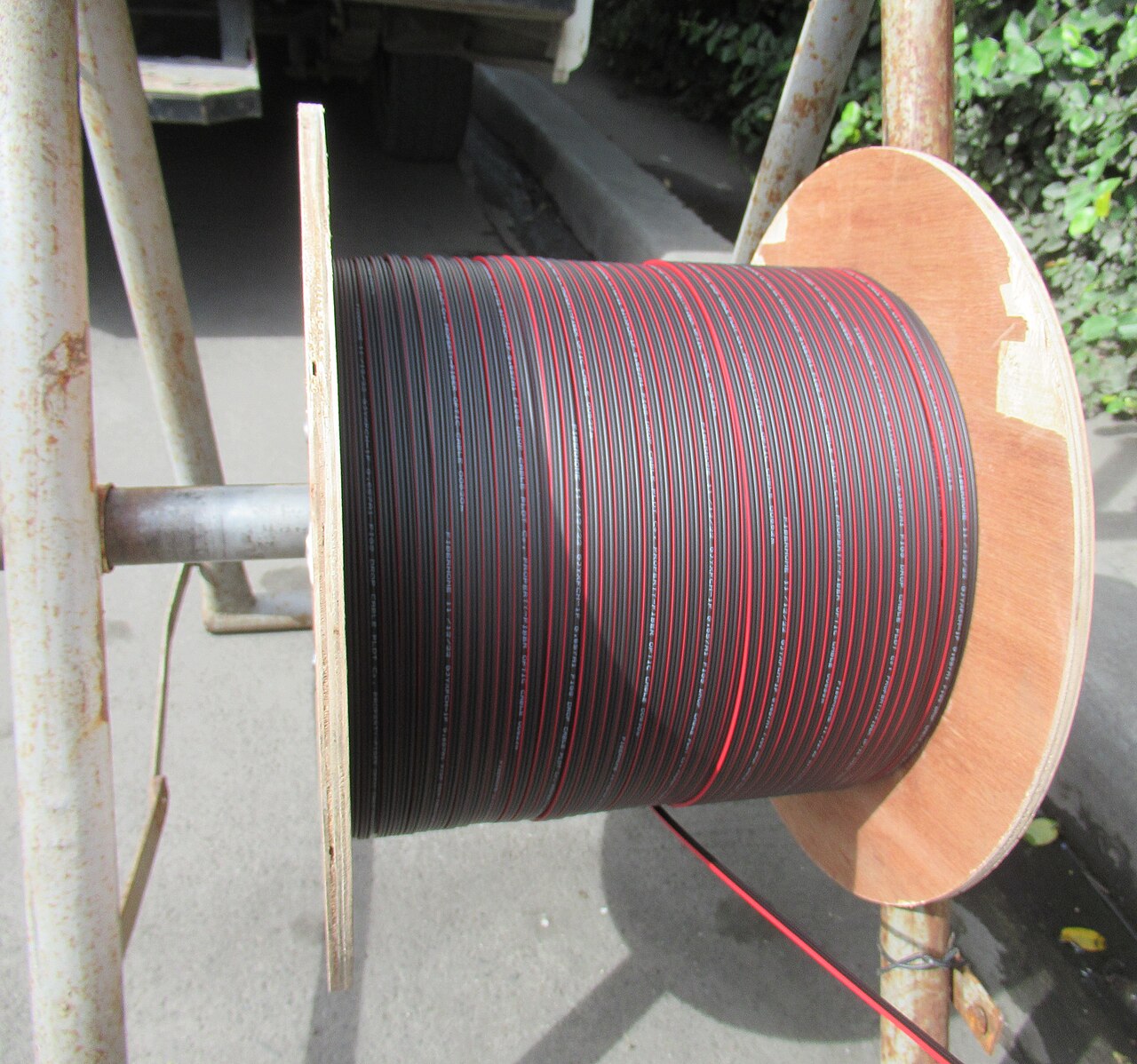
Fig. 1 — Measurement before conclusion: instrumented work, documented inputs.
02 Focus Areas
We organise our work around three areas. In practice they overlap; the separation is a convenience, not a claim.
AREA 01
Order Flow Analytics
Order flow is the sequence of aggressive buys and sells that moves the book. We rebuild it from raw feed messages, aggregate it into interpretable windows, and study imbalance, absorption and exhaustion. The recurring question is not whether a pattern appears in the data, but whether it survives transaction costs and realistic fill assumptions.
AREA 02
Market Microstructure
We study the mechanics of the limit order book: quote lifetimes, queue position, spread behaviour around volatility, the auction transitions at the open and the close, and the role of latency. Microstructure is where the friction lives that most aggregate statistics quietly hide.
AREA 03
Data & Tooling
Research is only as good as its pipeline. We build reproducible ingestion, storage and replay tools for tick data, with explicit versioning, checksummed datasets and deterministic backtests. If a result cannot be rebuilt from a dated dataset and a recorded method, we treat it as a draft rather than a finding.
Fig. 2 — Structured traffic: the feed is the raw material, not the conclusion.
03 Method & Principles
Six working rules shape how studies are designed, run and reported in the lab.
Reproducibility before novelty. A result that cannot be rebuilt from the same inputs is not yet a result.
Data quality is the first model. Gaps, duplicates and clock drift are treated as findings, not housekeeping.
Costs belong inside the experiment. Spread, fees, latency and finite liquidity are part of the model, never an afterthought.
Describe, do not promote. We report what the data shows — including when it shows nothing of interest.
Small and documented beats large and opaque. A narrow dataset we fully understand outranks a broad one we do not.
Share the method. Notes, tooling and negative results are published alongside anything that works.
These principles are deliberately conservative. Much public discussion of trading technology is optimistic by default; the laboratory's position is that the useful contribution is clarity. Where our work contradicts a popular claim, we say so. Where it is inconclusive, we say that too.
Fig. 3 — The infrastructure that has to hold before any claim is made.
04 Contact
Correspondence is welcome — research questions, dataset notes, corrections, or collaboration on microstructure problems.
Write to [email protected], or use the form. We read everything; we reply when there is something substantive to say.